The History of Winamp

The History of Winamp: From MP3 Revolution to Today

If you used a computer in the late 1990s or early 2000s, chances are you remember Winamp. For many music lovers, it wasn’t just another media player. It was the soundtrack to an entire generation of internet users discovering digital music for the first time.

The Beginning of a Music Revolution

Winamp was first released in 1997 by Justin Frankel and Dmitry Boldyrev through their company, Nullsoft. At a time when CDs still dominated the music industry, MP3 files were beginning to change the way people listened to music. The problem was that there weren’t many easy-to-use players available.
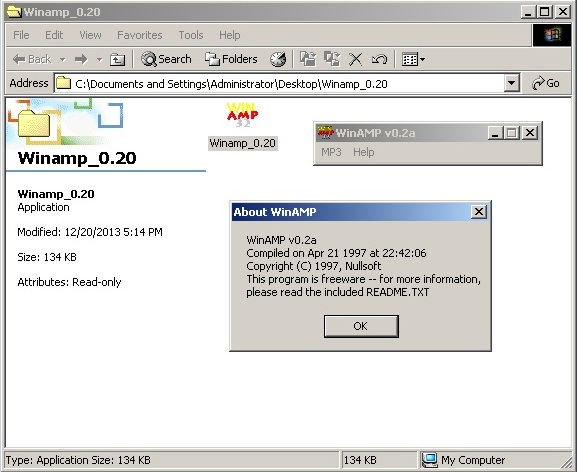
Winamp arrived at exactly the right moment.

The software was lightweight, fast, and incredibly simple. Users could drag their MP3 files into a playlist and start listening immediately. Unlike many programs of that era, Winamp didn’t feel complicated. It just worked.

The famous slogan quickly became one of the most recognizable lines in software history.

Why Everyone Loved Winamp

Part of Winamp’s success came from its flexibility. Users could customize almost everything.

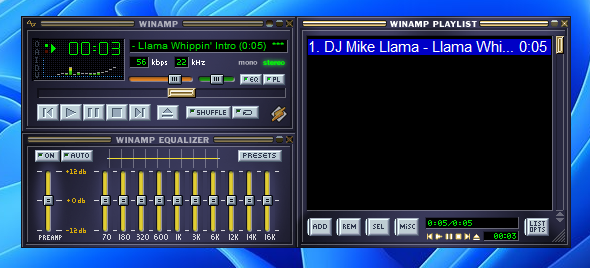
You could: install thousands of different skins, add visualization plugins, create and organize playlists, use keyboard shortcuts, and customize the interface to fit your personal style.

For young computer enthusiasts, Winamp wasn’t just a music player. It was a hobby. Many people spent hours downloading skins and experimenting with new visual effects while listening to their favorite songs.

The software felt personal in a way that modern streaming apps often don’t.
The Golden Age

By the early 2000s, Winamp had become one of the most popular media players in the world.

Millions of users relied on it every day. The rise of broadband internet and MP3 file sharing only accelerated its growth. Whether people were organizing their music libraries, creating mix playlists, or discovering new songs online, Winamp was often at the center of the experience.

In 1999, AOL acquired Nullsoft. At the time, it seemed like Winamp’s future was secure. The player continued to evolve, adding support for more formats, online radio stations, CDs, and video playback.

For a while, Winamp appeared unstoppable.

The Slow Decline

Technology rarely stands still.

As the years passed, new competitors entered the market. Apple’s iTunes became the preferred choice for iPod owners. Streaming services started changing how people accessed music. Instead of maintaining huge MP3 collections, users began listening to songs directly from the internet.

Winamp was still loved by its loyal community, but its place in mainstream computing slowly faded.

In 2013, reports emerged that Winamp was going to be discontinued. Many longtime fans believed the story was finally over.

A Surprising Comeback

Despite predictions of its demise, Winamp never completely disappeared.

A passionate community continued using the software, maintaining plugins, creating skins, and sharing knowledge online. The nostalgia surrounding Winamp remained incredibly strong.

In recent years, newer versions have been released, keeping the legendary player alive for modern Windows systems. While today’s music world is dominated by Spotify, Apple Music, YouTube Music, and other streaming platforms, Winamp still appeals to people who prefer owning and managing their own music collections.

Many users appreciate its speed, low resource usage, and freedom from subscriptions.

Why Winamp Still Matters

Winamp’s legacy is larger than the software itself.

It represents a unique period in internet history when users had more control over their digital experiences. Music libraries lived on hard drives, playlists were carefully crafted by hand, and software could be customized down to the smallest detail.

For many people, launching Winamp today feels like opening a time capsule. The familiar interface instantly brings back memories of burned CDs, early forums, downloaded MP3s, and long nights spent discovering new music.

In a world increasingly focused on cloud services and streaming subscriptions, Winamp reminds us that sometimes simple software can leave the biggest mark.

Final Thoughts

Nearly three decades after its debut, Winamp remains one of the most beloved media players ever created. It helped define the MP3 era, influenced how millions of people consumed music, and earned a place in computer history that few applications can match.

Whether you’re a longtime fan revisiting old memories or a new user curious about one of the internet’s classic programs, Winamp is proof that great software never truly dies. Sometimes it just finds a new generation of listeners.
Download Winamp

Winamp for Linux

Winamp for Linux

Date: October 2001
Author: Nullsoft
Version: Version 3 (Alpha 1)
OS: Linux
File Size: 1.5 MB
Last Updated: 26/04/2026

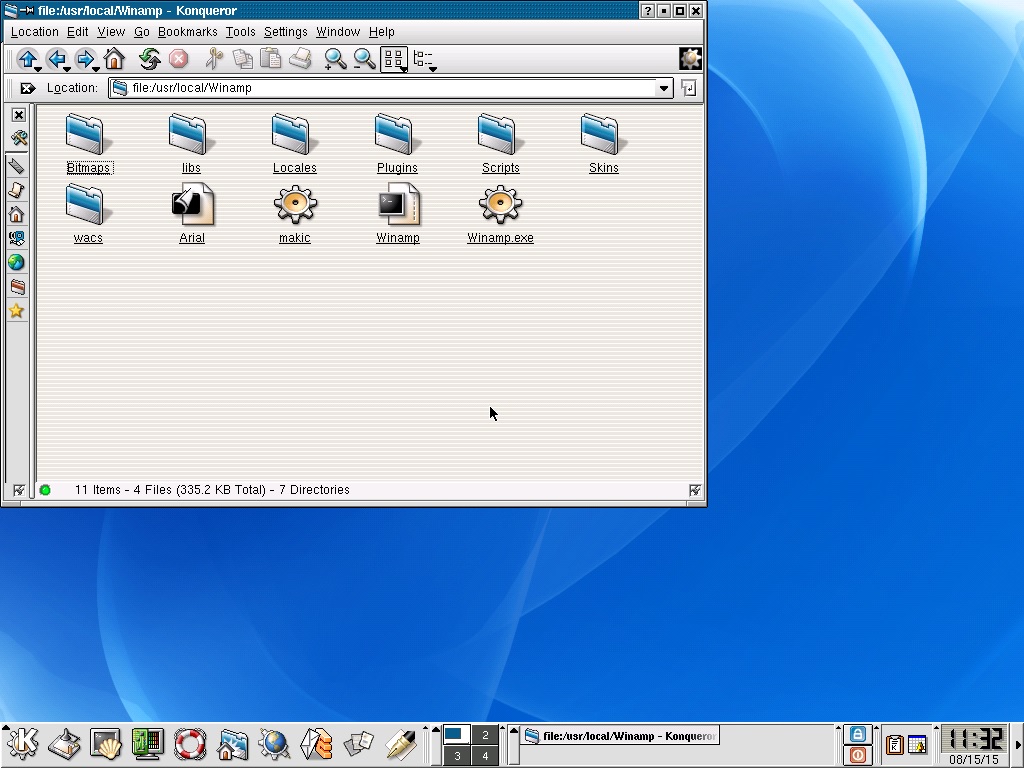
The linux version of Winamp, Nullsoft released an alpha version of Winamp3 on October 9, 2001, but has not updated it despite continued user interest. Winamp 3 for Linux is a fast and classic MP3 music player and has finally converted to Linux. The media player Winamp supports all popular media formats (like MP3, CD etc.).
The Winamp installation packege RPM are available for almost all the popular RPM base Linux systems, so you do need to compiling with gcc. If you have a Debian or Ubuntu based system you should use the alien program to install an RPM packets.
And after installing you can to get a skins that suits your desktop. Have a fun with old school Winamp.

Winamp Linux

Winamp for Linux works fine on Red Hat Linux with kernels 2.2 or 2.4. This version have been tested with Red Hat 6.2 and 7.0.

Download Winamp for Linux

Installation tips on Red Hat:

1. Download and Install XFree86-libs-data-4.3.0-55.i386.rpm
2. Download and Install XFree86-libs-4.3.0-55.i386.rpm
3. Download Winamp-Linux-3.rpm
4. Run Winamp

Download Winamp for Linux

Winamp Windows 11

Winamp for Windows 11

Last updated: August 7, 2026
File Size: 24.00 MB

Winamp, (Windows Advanced Multimedia Products) was first released on April 21, 1997, and created by Justin Frankel and Dmitry Boldyrev under the Nullsoft banner, is a media player that supports a variety of audio formats, including MP3, AAC, FLAC, WAV, and WMA.

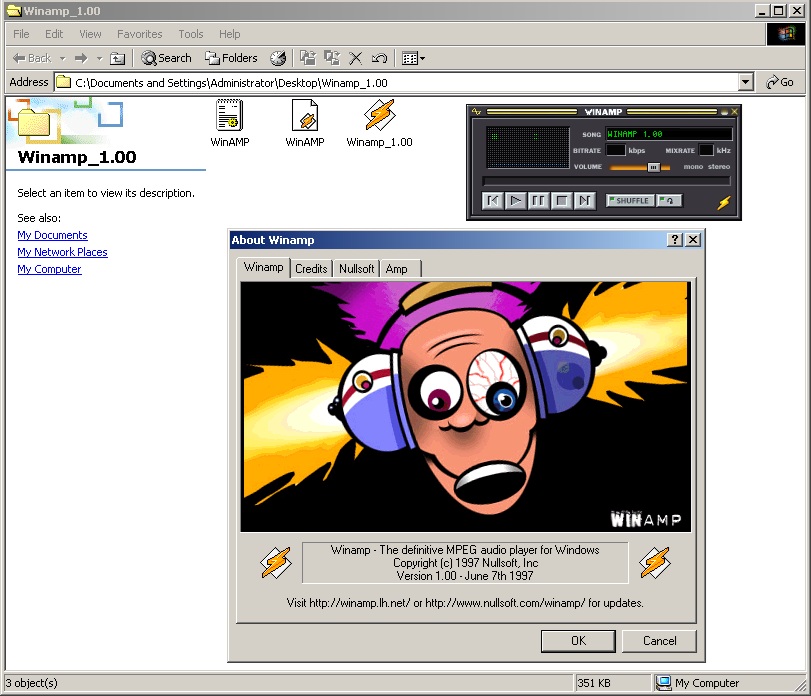
Early versions of the player – named WinAMP as a combination of “Windows” and “AMP” (an abbreviation for the Advanced Multimedia Products MP3 file playback engine it employed) – had basic controls, but by the time version 1.006 was released a few months later, its iconic graphical user interface had taken shape.

Winamp was an instant success with early adopters. By mid-1998, the programme, which began as freeware but later switched to a shareware model, had been downloaded over 3 million times. This piqued the interest of major media companies, including AOL, which purchased Nullsoft in June 1999 for $80 million in stock and continued to operate it as a subsidiary.

Soon after, mainstream success followed. Winamp had 25 million registered users by June 2000, and only a year later it had surpassed the 60 million user mark. It was obvious that MP3s would be the next big thing in music. And they were for a while.

Winamp made it simple to make a playlist: simply drag files into the playlist window and begin listening. This, in conjunction with early file-sharing networks, altered how people discovered and listened to music. Winamp grew to 90 million users, before fading away into obscurity when the likes of iTunes came onto the scene with its relatively decluttered look and seamless search function. However, it is now making a comeback.

From 1997 to 2013, the original Winamp media player was under development, with the final version being v5.666.3516. An unfinished build of v5.8 was leaked in October 2018, and Radionomy (the owner of Winamp, now known as Shoutcast) decided to make it public. More updates were promised, but they were never delivered.

A live video included the seemingly impromptu appearance of a new app called Media Player, as reported by Windows Latest and other blogs. This appears to be a modern replacement for Windows Media Player, which debuted in Windows Millennium Edition and hasn’t been updated in years.

The newest version of Winamp for Windows 11 functions as a music library, allowing users to browse and play music, as well as create and manage playlists. In addition, any music and playlists from Groove Music will be automatically transferred to the Media Player, which will take the place of the Groove Music app. There’s also a dedicated playback mode that shows album art in full screen and mini player mode.

The new Media Player app may eventually replace the legacy Windows Media Player app that is currently available on Windows 11. However, Microsoft has stated that the legacy music app will remain available in Windows Tools. Also, because video and music are now combined, the standalone Movies & TV app is no longer required.

The company officially released Winamp’s first update in years. The update added support for Windows 11. Simultaneously, Radionomy (the new owners of Winamp) announced that they are working on a new Winamp for Windows and other platforms.

The updated website of Winamp includes a new statement indicating that the media player is making a comeback. Sign up for Winamp’s newsletters to be notified when the redesigned player is available for Windows 11, and other platforms.

Radionomy has not specified when the Media Player app will be made available to general users, but it has stated that during testing with Insiders, some issues were encountered that prevented playback from network locations. There are also a few bugs with editing album metadata, sorting library content with accented characters, and UI elements that ignore the user’s app theme preference.

The new Winamp appears to be more of an audio streaming platform, akin to Spotify or Pandora, than an update to a music player application. AudioValley could simply be using the Winamp name to generate publicity for an audio platform that is not very— there is a distinct lack of media players that are not simple web apps right now.

In addition, Radionomy intends to “add new ways to browse your music and video collections and manage your play queue.” [1]

There are plenty of third-party, potentially better alternatives to Windows Media Player, but the latter retains a special place in the hearts of many Windows users who grew up watching and listening to content on the default media app. Microsoft pushed its own first-party alternatives, namely Groove Music and the Movies & TV apps that debuted on the platform with Windows, out of the spotlight in Windows 11 and buried WMP in the menus.

Below you could find the Winamp for Windows 11 (Windows media player) with contains additions, cumulative set of all hotfixes, and security updates.

Download Winamp for Windows 11

References

[1] Microsoft: Here’s our new media player for Windows 11 to replace the Groove Music app, Liam Tung, Nov 2021, https://www.zdnet.com/article/microsoft-heres-our-new-media-player-for-windows-11-to-replace-the-groove-music-app/